
Lebanon Previous Residents by Record Era
One Lebanon address can leave different kinds of evidence in different eras. The Recorder's current online statement says deeds are indexed through 1797, while a local guide describes land records from 1799. Treat the Recorder statement as the online starting claim and confirm the earliest book coverage at the office. The Warren County Records Center has holdings from 1803 and provides the archival bridge where a web search is incomplete.
| Lebanon previous-residents source | Years or availability | Where held | What it can establish |
|---|---|---|---|
| Recorder deed index | Online deeds and index through 1797 per Recorder; local guide says land from 1799. | AVA and Recorder in Lebanon, 406 Justice Drive | Recorded conveyance chain, legal description, grantor, and grantee. |
| Records Center archives | Holdings date to 1803; material 75 years or older is researchable. | Lebanon, 406 Justice Drive, Room 052 | Older department records and archival support. |
| Tax duplicates | Lebanon-area material from 1809, with gaps. | Records Center and WCGS resources | Taxpayer and property-presence clues between deeds. |
| Wills and estates | Lebanon-area estates from 1800. | Records Center and Probate | Estate link, heirs, and disposition context. |
| Western Star newspapers | Lebanon publication, 1807 to 2013, with some missing issues. | Ohio Memory, WCGS, and Harmon microfilm | Moves, obituaries, property notices, and community clues. |
| Federal census | Public through 1950 under the 72-year release rule. | NARA, FamilySearch, or Lebanon institutional access | A household snapshot to pair with the address trail. |
For previous residents in Lebanon, lead with the current Lebanon parcel for a recent question. For an early Lebanon question, check the deed and archive era first, then add taxes, newspapers, probate, and census records that fit the date.
Start Lebanon Past Residents With the Parcel
Use the Warren County Auditor Property Search to find the present Lebanon parcel from its address. Record the parcel number, situs address, legal description, subdivision or lot, book and page, and the current tax-record owner. The Auditor's physical-address fields and tax mailing fields are distinct. The latter is a tax contact, not proof that the listed party lives at the parcel.
The legal description matters most when a Lebanon address looks different in an old record. A lot, subdivision, book and page, or parcel lineage can continue through a road-name, postal, or numbering change. Lebanon research did not verify a citywide street-renumbering date, so an old spelling or number should be preserved and tested against plats, maps, tax duplicates, and recorded land descriptions.
The Warren County online vital-record order page is shown below because vital records can supply a dated family endpoint after an address trail has been carefully established.
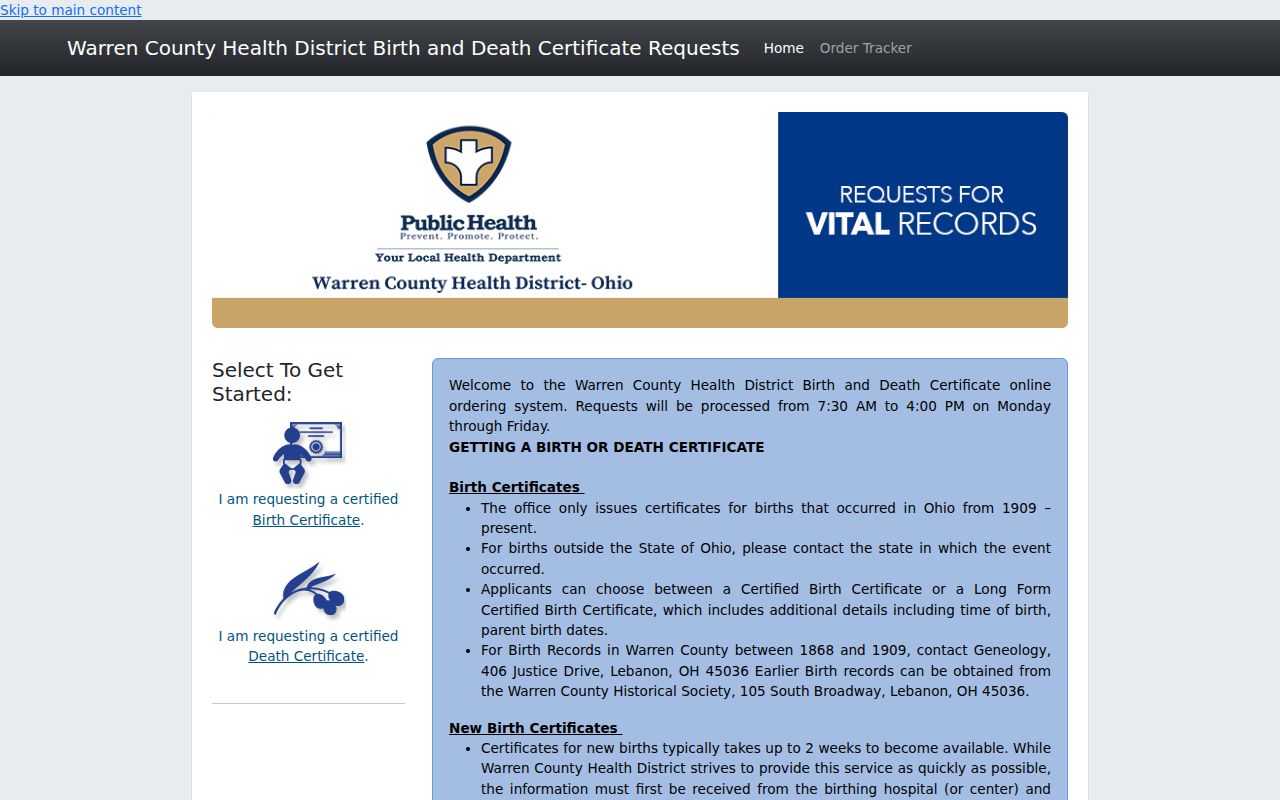
A birth or death record does not replace a parcel, deed, or directory record for an address. It is one dated clue to compare with the land and household timeline.
Walk the Lebanon Previous Residents Deed Chain
The Recorder directs searchers to the ten-digit parcel number obtained from the Auditor address or name search. In AVA, find the latest recorded transfer and save its date, instrument type, grantor, grantee, document or book/page reference, and legal-description wording. For the next step backward, look for the current seller or grantor as a possible earlier grantee. The matching work is on the land description, not merely a similar street address.
- Get the current Lebanon parcel number, lot or subdivision, legal description, and tax-record owner from the Auditor.
- Use the Lebanon Recorder's AVA route to locate the latest recorded transfer by parcel number or name.
- Copy the parties, recording date, instrument type, and Lebanon legal-description language into a dated research log.
- Search the grantor as a possible earlier grantee, then compare the same Lebanon lot, subdivision, or parcel lineage before moving back again.
- At a gap, use Lebanon Recorder deed books or index help, Records Center archival material, tax duplicates, probate, and newspaper notices.
- Grantor
- The party transferring an interest shown in a Lebanon recorded instrument.
- Grantee
- The party receiving that recorded interest. A Lebanon grantee entry is not by itself proof of residence.
- Chain of title
- The sequence of Lebanon recorded land interests traced through documents that match the same parcel or legal description.
- Legal description
- The recorded Lebanon land wording, lot, subdivision, survey, or other identifier that follows property more reliably than a street number.
The Warren County Recorder search instructions are the best stable entry point because the Recorder notes that AVA, Tapestry, and Laredo services can change. If an old bookmark fails, call 513-695-1382 or ask at the counter.
Use Lebanon Previous Residents Tax Clues
Deeds are not annual records. Between two Lebanon recorded transfers, Warren County tax duplicates can show a property or taxpayer clue from 1809 onward, though the series has gaps. Lebanon wills and estates reach from 1800, marriages from 1803 to 1996, and historic birth and death records from 1867 to 1908 in the local guide. These are context records. A probate connection may explain an estate transfer, but it must still be linked to the same person and land trail.
The Lebanon Records Center is the key non-web fallback. Its reading room has paper, electronic, and microfilm material, and records 75 years or older in its collection are accessible for research. Newer material belongs with the originating department. The office is at 406 Justice Drive, Room 052, with weekdays 8 to 4:30 hours and telephone 513-695-1815.
Archive tip. For an event before May 1803, WCGS says the needed record may be in Hamilton County because Warren County was organized in 1803.
Pair Lebanon Past Residents With Census
A Lebanon deed chain records land interests, not a full household. For past residents, ask WCGS or Harmon whether a dated Lebanon directory, telephone book, or reverse section exists for the address and period. The public WCGS inventory is still under construction, so do not assume a particular year or publisher is available until the desk confirms it. Copy the title page and abbreviation key with any entry.
- Start with a surname, address, and estimated decade at WCGS, then ask whether an alphabetical or reverse Lebanon volume exists.
- Preserve the spelling, initials, occupation, address, and volume details exactly as printed.
- Choose the nearest public federal census year and compare its place, age, birthplace, and household clues with the dated directory entry.
- Search the same name and address in the Western Star and related Lebanon titles for a move, death, family, or civic clue.
- Test the result against tax, deed, probate, or vital evidence before treating it as a household conclusion.
The historical collection details belong on the Lebanon City Directories page. Here, a directory is one time-stamped part of the backward address trail, not a stand-alone ownership finding.
Read Lebanon Previous Residents in the Western Star
The Western Star is Lebanon's unusually long local chronology. It ran from 1807 to 2013, and WCGS's Lebanon project makes 178,510 digitized pages in 9,909 issues available through Ohio Memory, while noting that some issues are missing. Harmon holds the hard-copy and microfilm archive. Search a name with a Lebanon address, street, business, or date, then browse around an OCR hit when the scan is poor.
Lebanon title changes matter. A search may need Western Star & Lebanon Gazette, Star & Gazette, Weekly Western Star, Lebanon Daily Star, or Western Star and the Lebanon Patriot. A newspaper notice can identify a move, death, business, or community event, but it needs confirmation in the record held by the appropriate custodian.
The Ohio Vital Statistics portal below is a current system reference for official vital-process questions.
Ohio's current vital system notes that IPHIS and EDRS have been deactivated for business-partner creation, so current process questions should go to WCHD or ODH rather than an obsolete instruction.
Get Lebanon Past Residents Research Help
Mary W. Klei Research Library at Harmon Museum is the specialized local fallback when an address changes form or a legal description needs map context. Its property and Warren County history collections include atlases, maps, photos, court and tax material, cemeteries, local newspapers, and family files. Staff research is available Tuesday and Thursday from 10 to 4. A preliminary search costs $5, followed by $10 an hour for members or $20 an hour for nonmembers, plus 25 cents per copy and shipping.
Give the Lebanon staff the research question, known names and dates, the desired research time, and a daytime phone number. Lebanon WCGS and the Records Center are companion stops. The local sources do not establish a dedicated house-history guide, so the sound approach is a focused property-history request rather than an assumed special program.
The Ohio Vital Statistics information page identifies the state vital-records program shown in this reference image.
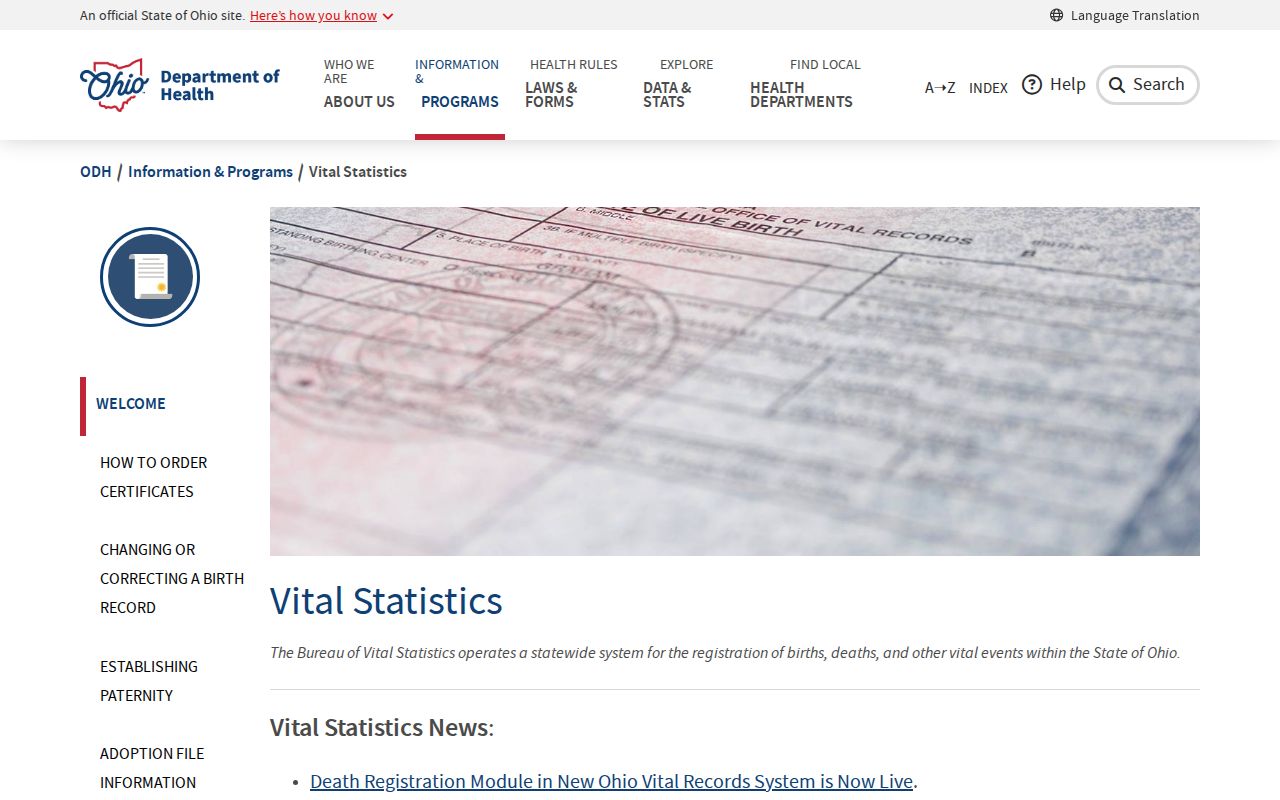
For a historic Lebanon vital clue, compare the event date and person carefully with deeds, tax duplicates, probate, newspaper, and census evidence rather than drawing a Lebanon address conclusion from the vital source alone.
Keep Lebanon Previous Residents Evidence Separate
Warren County GIS aerials for Lebanon in 1995, 2000, 2005, 2008, 2012, 2014, 2017, 2018, 2020, 2022, and 2023 can frame a question about a visible parcel change. They cannot identify an occupant or prove when a structure was built. Use a change between two images to narrow a Lebanon City permit, Recorder, or Auditor request, then rely on the responsive record for the conclusion.
Federal custody and court tools have their own limits as well. The Federal Bureau of Prisons Inmate Locator is for federal custody, not a Lebanon address history.
A federal locator result cannot establish who lived at a Lebanon property. It must not be used as a substitute for county land, archive, or household records.
PACER is a federal court-record system, also separate from a Warren County chain of title.
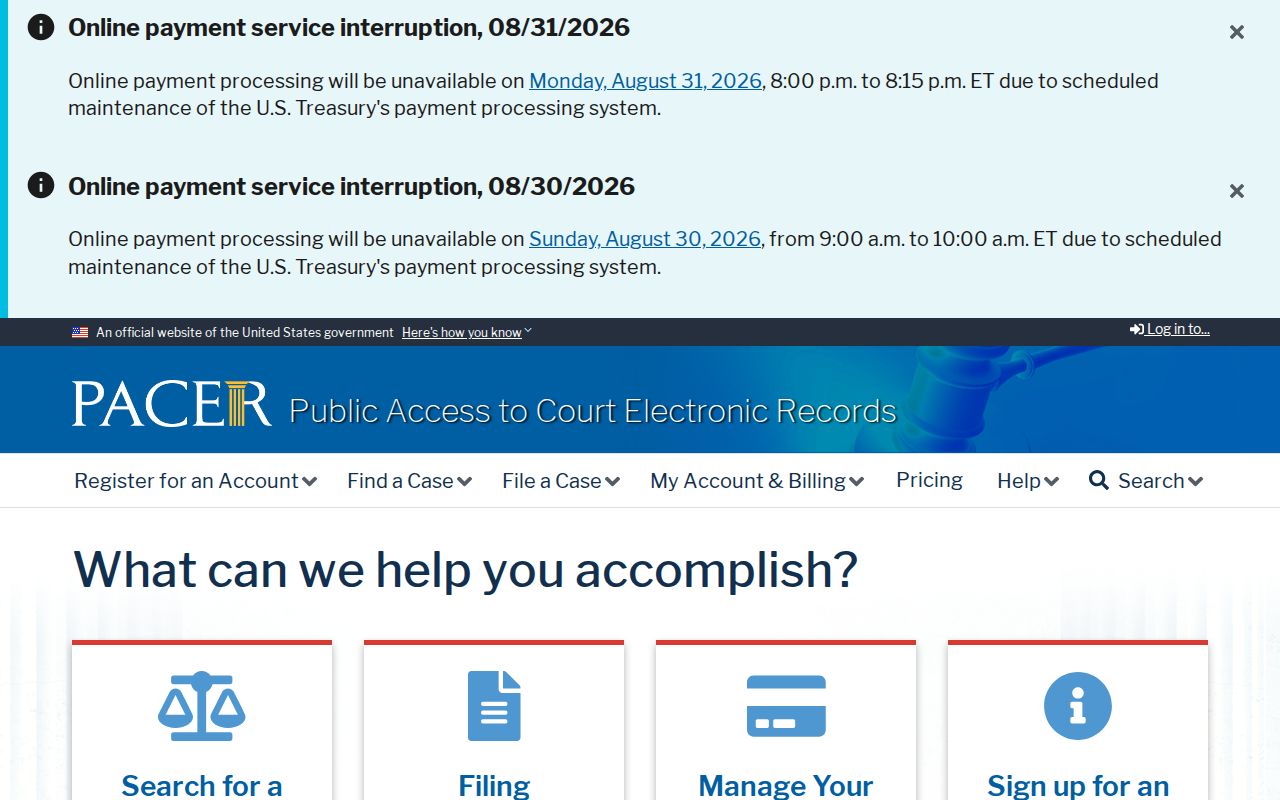
A federal court filing may concern a party or case, but it is not proof of past residence at a Lebanon address. Keep federal records in their proper record context.
Respect Lebanon Previous Residents Limits
Ownership and occupancy are different questions. A recorded deed proves a transaction role, while a directory, census, newspaper, or tax clue reflects its own date and purpose. Public sources do not reveal every person connected to an address, and protected voter, DMV, utility, postal, and Safe at Home information is not an address-history fallback. A missing entry does not prove a person was absent.
Lawful use. Lebanon previous-residents research supports family history, property history, estate questions, and personal curiosity. Never use an address trail to stalk, harass, intimidate, or harm a living person.
Safe at Home Ohio protects eligible participants through substitute addresses and confidential voting options. Do not combine parcel, map, or public-record clues to seek a protected location. Under ORC 149.43, a custodian may release nonexempt material while redacting protected information.